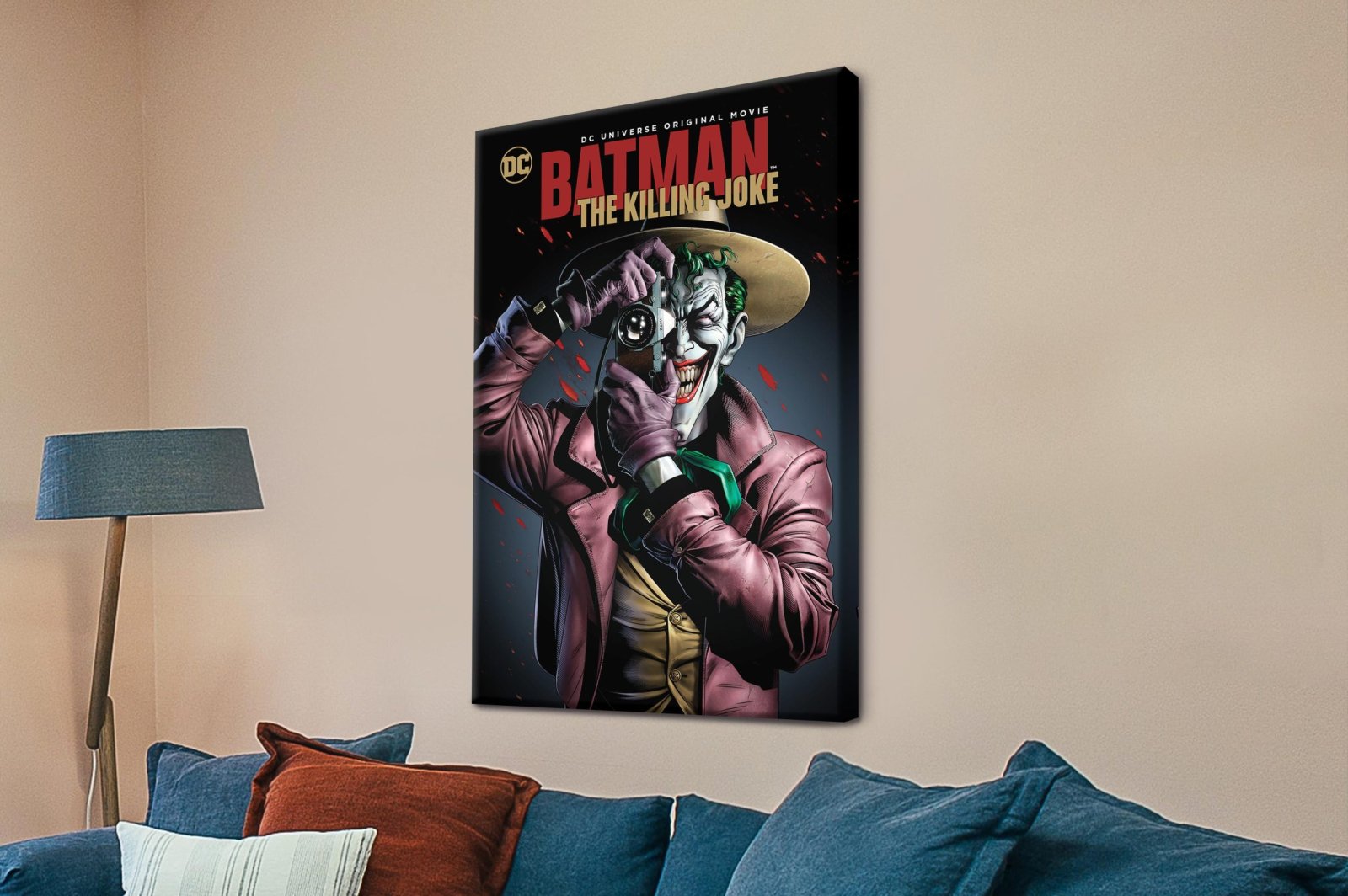
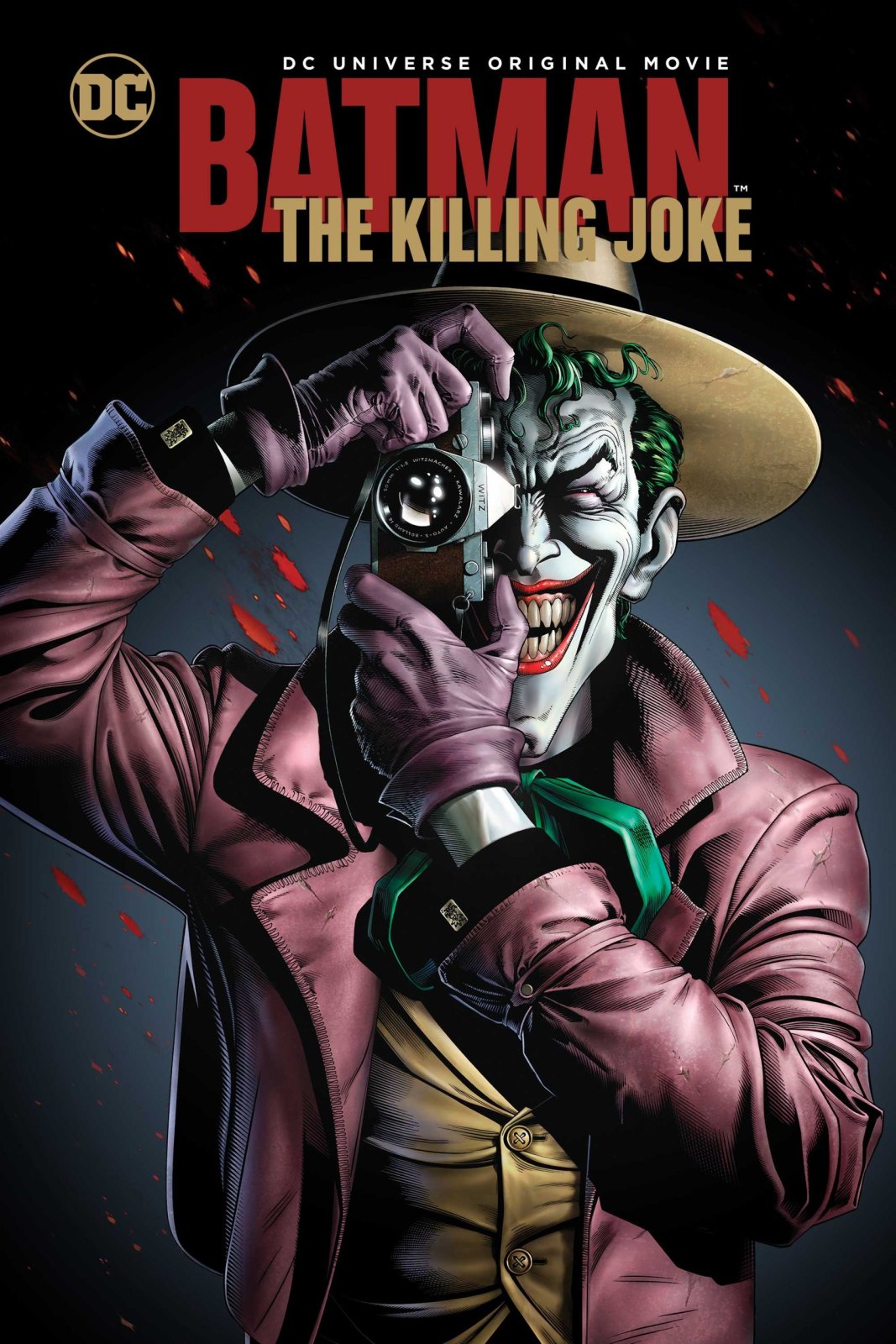

Batman: The Killing Joke Poster
From $30.00
Ideal for comic book enthusiasts, collectors, or anyone who enjoys the darker side of Gotham, this canvas print is perfect for living rooms, home offices, media rooms, or man caves. It can also bring an edge to bedrooms for those who appreciate the moody and atmospheric world of Batman. ✨ Whether you’re a die-hard Batman fan or a lover of striking, thought-provoking art, this print demands attention and starts conversations.
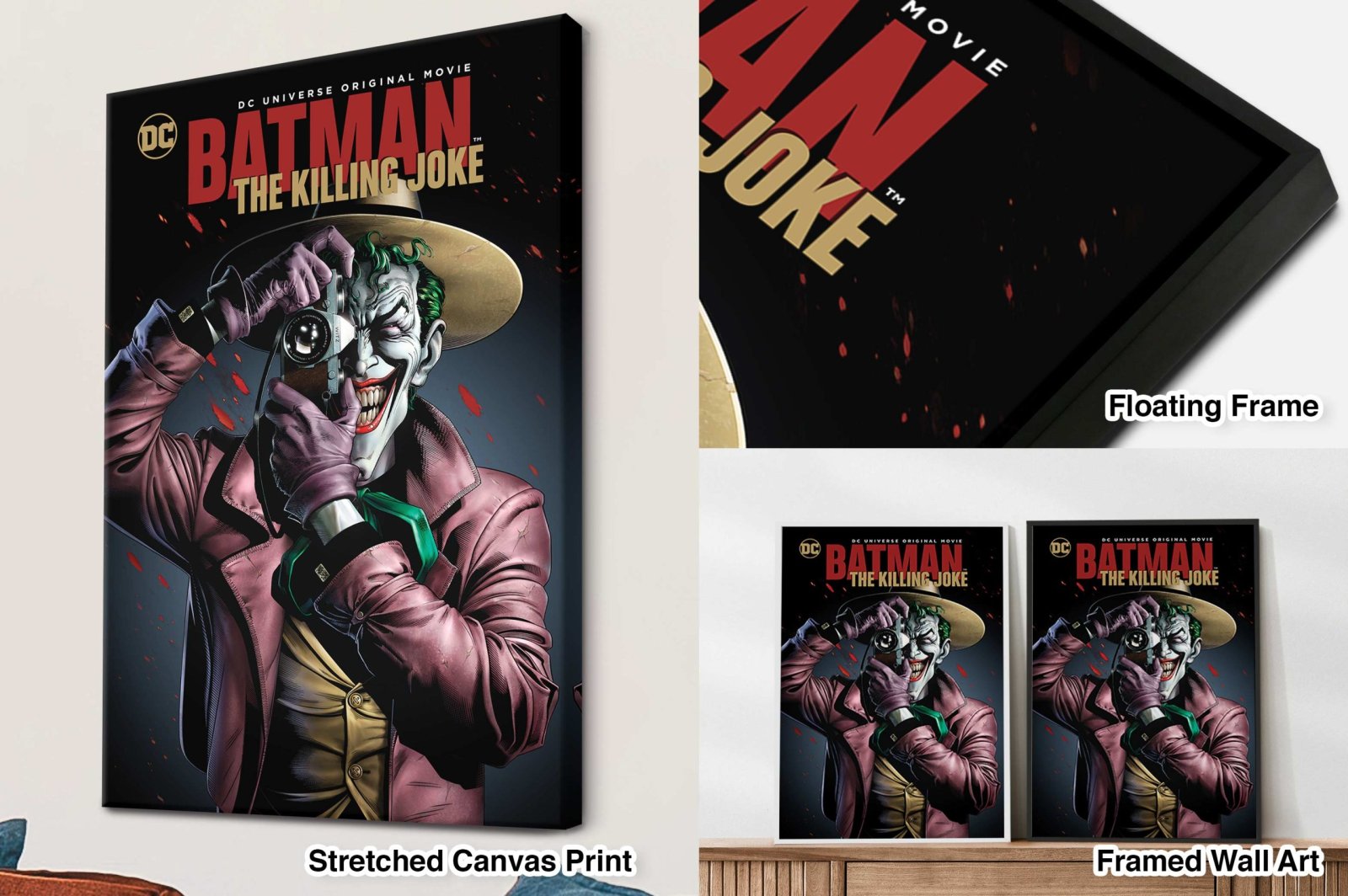
Choose from a variety of sizes to suit your space, from extra-large for a dramatic focal point to small for a more subtle homage. Whether you prefer a stretched canvas print, a framed print, or a rolled canvas, we have the option to match your style and aesthetic.
Why You'll Love This Piece:
- High-quality print that brings every vivid detail to life
- Available in a range of sizes to suit your space
- Transform your room with a piece that speaks to the darker side of superhero mythology ⚡
- Perfect for fans of Batman, graphic novels, and cinematic dark arts
And if you're a fan of cinematic history, make sure to explore our growing Vintage Movie Poster collection for more iconic movie artwork! From the action-packed world of James Bond to the chilling atmosphere of A Clockwork Orange, we have the perfect print for your walls: Explore our Vintage Movie Posters
Don't miss out on the chance to own this iconic Batman masterpiece on canvas. Order yours now!
- All Australian orders for Art are Hand Made in Noosa, Australia (*International orders are printed overseas)
- We use 100% Cotton, textured canvas NOT the cheaper plastic looking, Poly-Cotton
- Free image manipulation such as removing red-eye, straightening horizons and lightening the image if needed
- Art is delivered ready to hang on the wall, straight to your door
- Carefully bubble wrapped and boxed to prevent damage in transit
- Free choice of 6 wrapping types
- Every canvas print is stretched by hand on a thick, 1.5” quality kiln-dried pine wood stretcher frame
- Protected with invisible spray UV laminate against fading in the harsh Australian climate, our art shouldn’t fade for up to 70 years!
The Canvas Prints Perth Difference
Related products
-

Creature from the Black Lagoon
Shop Now This product has multiple variants. The options may be chosen on the product page -

The Good The Bad and the Ugly
Shop Now This product has multiple variants. The options may be chosen on the product page -

Cool Hand Luke I
Shop Now This product has multiple variants. The options may be chosen on the product page -

Seven Samurai
Shop Now This product has multiple variants. The options may be chosen on the product page
Batman: The Killing Joke was a graphic novel published in 1988, written by Alan Moore with artwork by Brian Bolland. It presented a darker, more mature take on the Batman mythos, exploring the psychological depths of both Batman and his arch-nemesis, the Joker. The novel was conceived as a one-shot story and quickly became a critical and commercial success, regarded as one of the most influential Batman stories of all time. Its impact was felt not only within the comic book world but also in the broader realm of superhero storytelling, cementing the Joker’s position as a deeply complex and tragic character.
The plot centred on the Joker’s origins and his attempt to drive Commissioner James Gordon insane, all while delving into the stark contrast between Batman’s code of justice and the Joker’s chaotic madness. The graphic novel sought to explore the idea that both Batman and the Joker could have emerged from similar tragic circumstances, which further intensified the tension between them. The Joker’s origin, revealed through flashbacks, added depth to his character, portraying him as a failed comedian who descended into madness after a series of unfortunate events, ultimately turning him into the villainous mastermind he became.
Brian Bolland’s artwork in The Killing Joke stood out for its attention to detail and its stark contrast in colour, which helped reinforce the novel’s mature themes. The illustrations, particularly the grotesque and disturbing portrayal of the Joker, added an extra layer of intensity to the story. The novel’s visual style became iconic, with the infamous scene of Barbara Gordon’s shooting forever associated with the book. The use of colour and shadow played a key role in depicting the emotional and psychological weight of the characters’ experiences, particularly the oppressive atmosphere surrounding the Joker’s chaotic world.
Over time, The Killing Joke gained a reputation as a defining moment for the Batman series, influencing countless adaptations and reinterpretations of the character. It provided a more nuanced perspective on the Dark Knight and his rogues’ gallery, offering insight into the complexity of the Joker as a character who defied traditional villain tropes. Despite its controversial elements, particularly the portrayal of Barbara Gordon, it remained a seminal work, inspiring both admiration and critique, but always drawing attention to the darker side of the Batman universe.