


The Fiddler Marc Chagall Expo Poster
From $30.00
Marc Chagall’s The Fiddler (1913) reissued as a modern art poster, with the green-faced violinist in his white coat balanced over snow-covered Vitebsk roofs and a tiny upside-down acrobat overhead. Printed in our Perth studio on stretched canvas, framed paper, lustre or floating frame, with the gallery title block and ‘CHAGALL 1913’ typography preserved.
- All Australian orders for Art are Hand Made in Noosa, Australia (*International orders are printed overseas)
- We use 100% Cotton, textured canvas NOT the cheaper plastic looking, Poly-Cotton
- Free image manipulation such as removing red-eye, straightening horizons and lightening the image if needed
- Art is delivered ready to hang on the wall, straight to your door
- Carefully bubble wrapped and boxed to prevent damage in transit
- Free choice of 6 wrapping types
- Every canvas print is stretched by hand on a thick, 1.5” quality kiln-dried pine wood stretcher frame
- Protected with invisible spray UV laminate against fading in the harsh Australian climate, our art shouldn’t fade for up to 70 years!
The Canvas Prints Perth Difference
Related products
-

The Persistence of Memory
Shop Now This product has multiple variants. The options may be chosen on the product page -
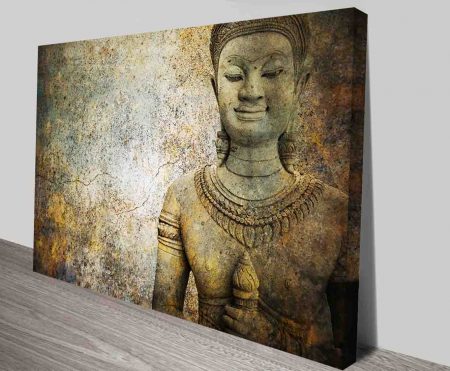
Stone Buddha Warrior Statue Ayutthaya
Shop Now This product has multiple variants. The options may be chosen on the product page -

Ocean Greyness by Jackson Pollock
Shop Now This product has multiple variants. The options may be chosen on the product page -

Wassily Kandinsky
Shop Now This product has multiple variants. The options may be chosen on the product page


“The Fiddler” by Marc Chagall, painted in 1912, is one of the artist’s most iconic works, embodying the themes of Jewish culture, folklore, and memory that permeated much of his life and art. This painting showcases Chagall’s distinctive style, blending dreamlike imagery with elements of Russian Jewish tradition. The central figure of the fiddler, suspended in mid-air against a colourful, whimsical backdrop, is both a symbol of joy and melancholy. The fiddler represents an important cultural figure in Chagall’s upbringing, often seen as a metaphor for the balance between the harshness of life and the transcendence of music and art.
The choice of the fiddler as the focal point reflects Chagall’s deep connection to his roots in the small Jewish village of Vitebsk, Belarus. In his work, Chagall often depicted his memories of this community, including the folk traditions and cultural practices that shaped his early life. The fiddler, often associated with celebration and communal gatherings, takes on an almost surreal quality in Chagall’s composition, as his floating position hints at the blending of earthly and spiritual realms. The vibrant colours and exaggerated forms enhance this sense of fantasy, emphasising the emotional weight of the figure.
In the painting, the fiddler’s elongated limbs and disproportionately large instrument contribute to the surrealistic qualities of the work. Chagall’s manipulation of space and perspective, with figures appearing to float in a dreamlike atmosphere, is a hallmark of his style. The vibrant palette—dominated by reds, greens, and blues—evokes a sense of movement and life, suggesting the rhythmic energy of the music. At the same time, the background is filled with fragmented elements of everyday life, such as houses and animals, which seem to dance around the fiddler, blurring the boundaries between the real and the imagined.
“The Fiddler” also speaks to Chagall’s evolving exploration of abstraction and symbolism. While the figure of the fiddler is still recognisable, the artist uses distortion and abstraction to convey the emotional essence of the subject rather than a literal representation. This departure from realistic portrayal marks a significant shift in Chagall’s artistic journey, moving away from the influences of Impressionism and Post-Impressionism towards a more individualistic, expressionistic style. The painting invites the viewer to experience a world that is both rooted in personal history and unbounded by conventional forms, making “The Fiddler” an enduring testament to Chagall’s unique artistic vision.
