



The Church at Moret Expo Poster
From $30.00
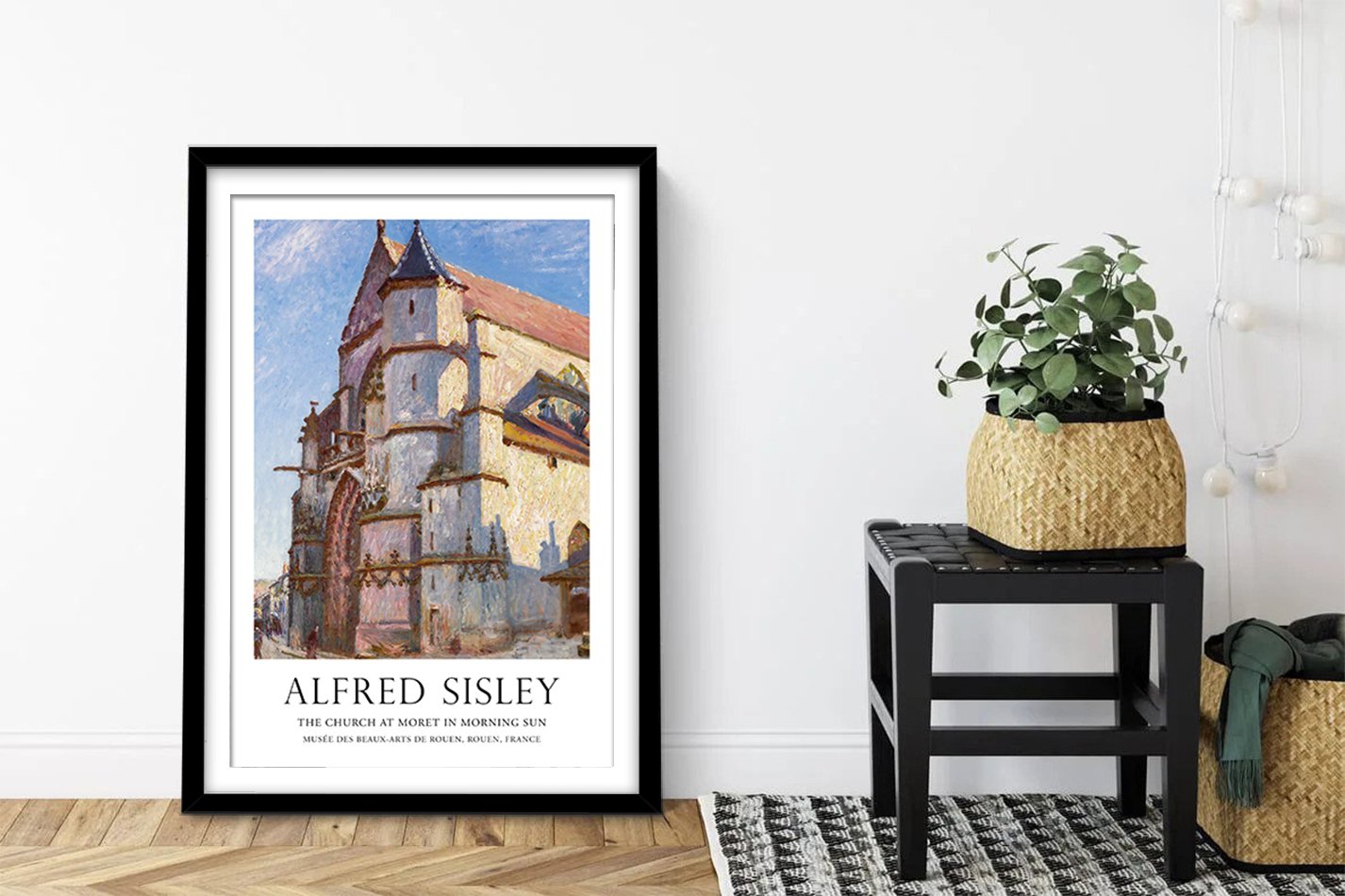
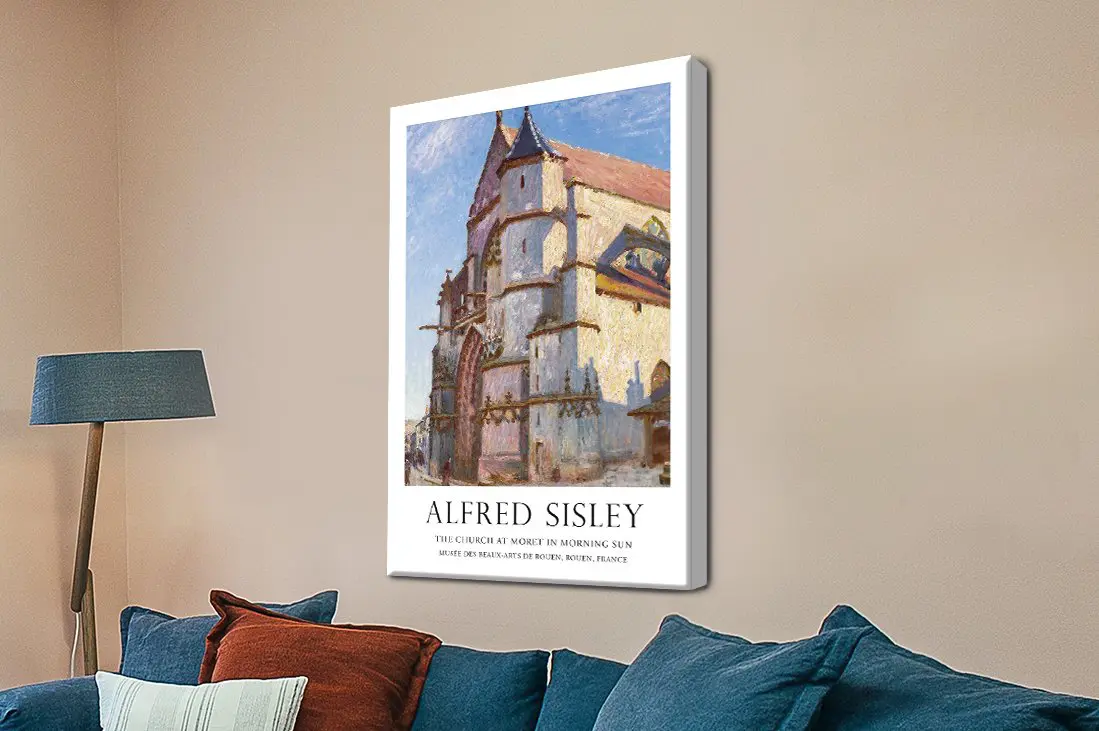
Alfred Sisley painted the Notre-Dame church at Moret-sur-Loing fourteen times across 1893 and 1894, working in every light from frost to high summer. Our impressionist art print recreates the museum exhibition poster of The Church at Moret in Morning Sun, with the warm stone face, slate spire and a blue Loire Valley sky above.
- All Australian orders for Art are Hand Made in Noosa, Australia (*International orders are printed overseas)
- We use 100% Cotton, textured canvas NOT the cheaper plastic looking, Poly-Cotton
- Free image manipulation such as removing red-eye, straightening horizons and lightening the image if needed
- Art is delivered ready to hang on the wall, straight to your door
- Carefully bubble wrapped and boxed to prevent damage in transit
- Free choice of 6 wrapping types
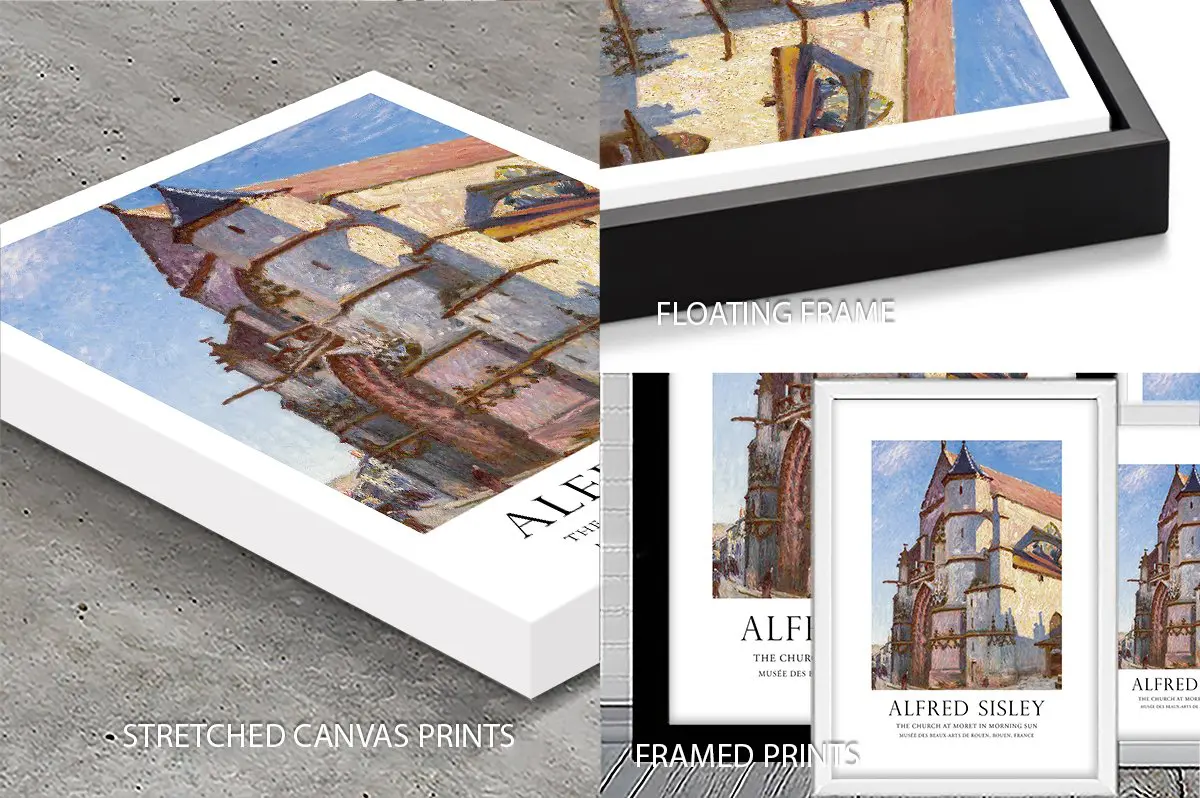
- Every canvas print is stretched by hand on a thick, 1.5” quality kiln-dried pine wood stretcher frame
- Protected with invisible spray UV laminate against fading in the harsh Australian climate, our art shouldn’t fade for up to 70 years!
The Canvas Prints Perth Difference
Related products
-

Fuji Mountains Exhibition Poster
Shop Now This product has multiple variants. The options may be chosen on the product page -

Banksy Sale Ends Today Expo Poster
Shop Now This product has multiple variants. The options may be chosen on the product page -

Venus Butterfly Dali Expo Poster
Shop Now This product has multiple variants. The options may be chosen on the product page -

Yayoi Kusama Tokyo 1999 Jellyfish Exhibition Poster
Shop Now This product has multiple variants. The options may be chosen on the product page


Alfred Sisley’s The Church at Moret in Morning Sun is a captivating Impressionist painting that beautifully exemplifies the artist’s fascination with light, atmosphere, and architecture. Created in 1893, this work is one of a series of paintings in which Sisley focused on the Church of Notre Dame in the small town of Moret-sur-Loing, located near Fontainebleau in France. By painting the church at various times of the day and under different weather conditions, Sisley explored the interplay between light and structure, capturing the unique mood of each scene. In this particular work, the morning sun bathes the church facade in a warm, golden glow, highlighting the intricate stonework and creating an almost ethereal quality.
The composition reflects Sisley’s skilful handling of perspective and his ability to balance architectural solidity with the ephemeral effects of light and colour. The church occupies a central position in the frame, its gothic spire and rose window drawing the viewer’s eye upward. Surrounding the church are softer elements of the landscape—trees, cobblestones, and a hazy blue sky—all rendered with loose, fluid brushstrokes typical of the Impressionist style. This juxtaposition of man-made structure and natural elements creates a harmonious balance, reflecting Sisley’s deep appreciation for the peaceful coexistence of nature and human craftsmanship.
Sisley’s decision to paint Moret-sur-Loing was not accidental. The town provided him with a wealth of picturesque subjects, and its charming medieval architecture aligned perfectly with his artistic vision. The Church of Notre Dame, in particular, became a recurring motif in Sisley’s later works. His paintings of the church reveal a meticulous study of changing light and weather conditions, reminiscent of Claude Monet’s approach to series painting. In The Church at Moret in Morning Sun, Sisley captures a moment of tranquillity and optimism, as the soft morning light symbolises renewal and the promise of a new day.
Today, The Church at Moret in Morning Sun is celebrated as one of Sisley’s most accomplished works, offering a glimpse into his mastery of light and atmospheric effects. It is an excellent example of his dedication to painting en plein air, a hallmark of the Impressionist movement, which enabled him to capture the subtleties of natural light and its impact on the scene. The painting not only serves as a tribute to the beauty of Moret-sur-Loing but also as a testament to Sisley’s ability to infuse his landscapes with emotion and lyricism, elevating everyday subjects into profound works of art.
