


Solitude Marc Chagall Exhibition Poster
From $30.00
An exhibition poster built around Marc Chagall’s 1933 Solitude — a white-cloaked rabbi cradling a red Torah scroll beside a quiet white cow with violin, set under a brooding blue sky. A modern art print made in Perth on stretched canvas, floating frame, framed paper or rolled paper.
- All Australian orders for Art are Hand Made in Noosa, Australia (*International orders are printed overseas)
- We use 100% Cotton, textured canvas NOT the cheaper plastic looking, Poly-Cotton
- Free image manipulation such as removing red-eye, straightening horizons and lightening the image if needed
- Art is delivered ready to hang on the wall, straight to your door
- Carefully bubble wrapped and boxed to prevent damage in transit
- Free choice of 6 wrapping types
- Every canvas print is stretched by hand on a thick, 1.5” quality kiln-dried pine wood stretcher frame
- Protected with invisible spray UV laminate against fading in the harsh Australian climate, our art shouldn’t fade for up to 70 years!
The Canvas Prints Perth Difference
Related products
-

I and the Village – Chagall
Shop Now This product has multiple variants. The options may be chosen on the product page -

The Dream by Henri Rousseau
Shop Now This product has multiple variants. The options may be chosen on the product page -

Figure 8
Shop Now This product has multiple variants. The options may be chosen on the product page -
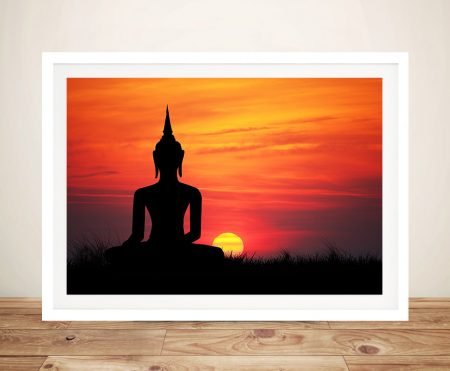
Buddha Statue at Sunset
Shop Now This product has multiple variants. The options may be chosen on the product page


“Solitude” by Marc Chagall, painted in 1933, is a powerful representation of the artist’s emotional state during a time of personal turmoil. The painting features a haunting figure of a solitary man, wrapped in the emotional weight of isolation and introspection. Chagall, a master of combining vivid colours and dreamlike imagery, uses this piece to explore themes of alienation, despair, and the inner conflict that can accompany solitude. The figure appears almost detached from the surrounding world, emphasising the emotional void he experiences. Through his bold use of colour, particularly the deep blues and muted tones, Chagall effectively conveys the inner emotional landscape of the subject.
The setting of “Solitude” is also significant. There is no clear external environment, which further isolates the central figure, as if he is trapped within his own mind. This reflects Chagall’s interest in the relationship between the individual and their inner world, as well as the struggle between personal identity and external pressures. The use of abstraction, with distorted shapes and figures, creates a sense of disorientation, mirroring the sense of loneliness and confusion that the subject is experiencing. This aspect of the painting is part of Chagall’s broader technique of creating art that transcends simple representation, inviting viewers to interpret the emotional and psychological states of the characters depicted.
Chagall’s work is often seen through the lens of his Jewish heritage, and “Solitude” is no exception. While the figure in the painting is not explicitly identifiable as a Jewish man, the isolation depicted may be seen as reflective of the artist’s personal experiences as a Jewish person in a Europe increasingly hostile to his community. At the time of its creation, Chagall was living in Paris, having fled Russia due to political instability and anti-Semitic sentiment. This sense of displacement, as well as the fear and uncertainty of the time, permeates the painting, evoking a deep sense of vulnerability in the figure.
The figure in “Solitude” is often thought to represent Chagall himself, or at least his personal struggles with being far from home and living in an increasingly unstable world. Chagall’s distinctive style, characterised by a blend of surrealism, cubism, and expressionism, allows him to articulate complex emotional states in a way that feels deeply personal yet universally relatable. The muted palette and sombre tone of the piece underscore the loneliness felt by the figure, while also offering a visual space for reflection on the nature of solitude and the human condition. As such, “Solitude” remains one of Chagall’s more introspective works, inviting viewers into a silent dialogue with the emotional depths of the artist’s experience.
