
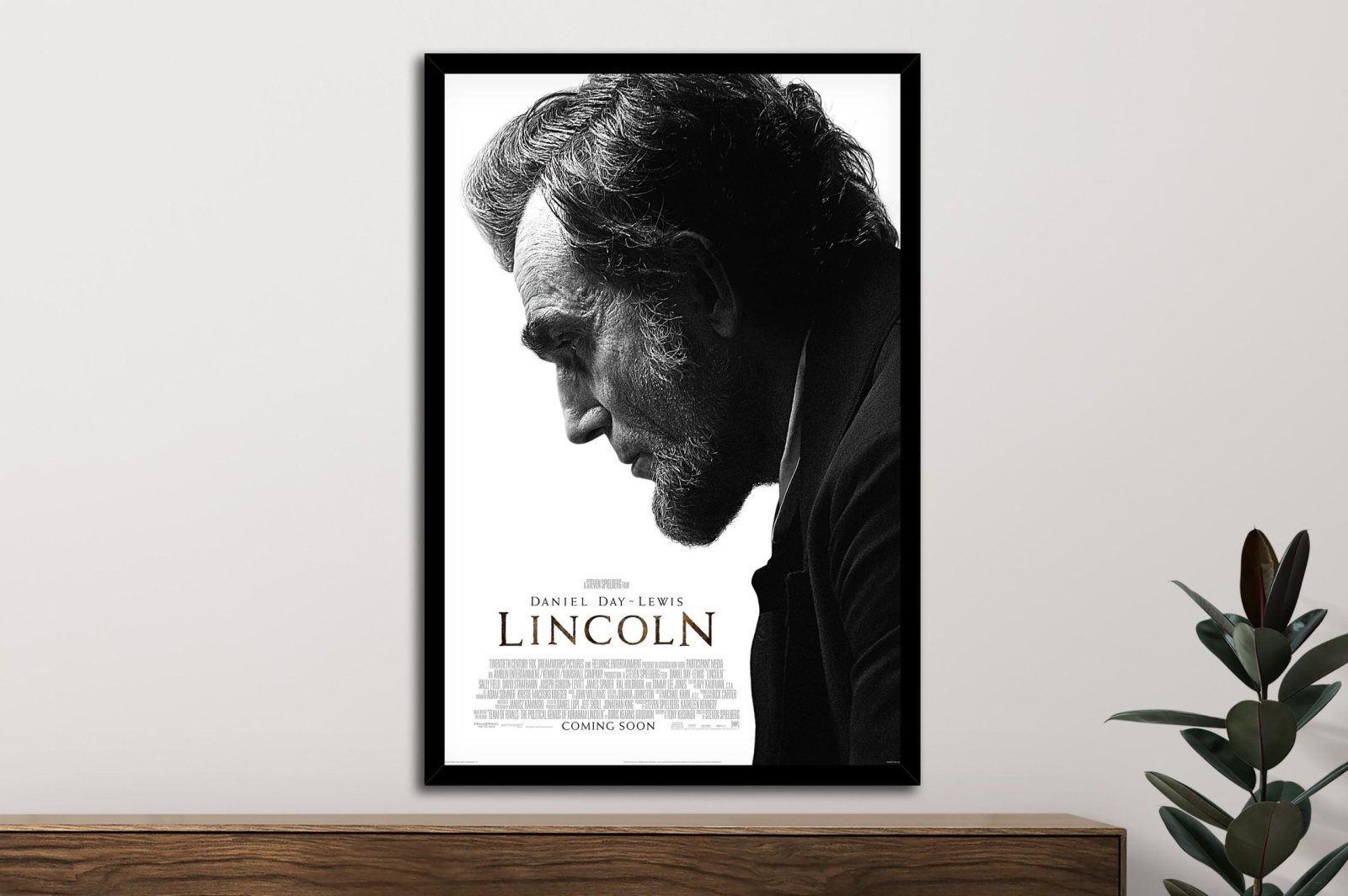

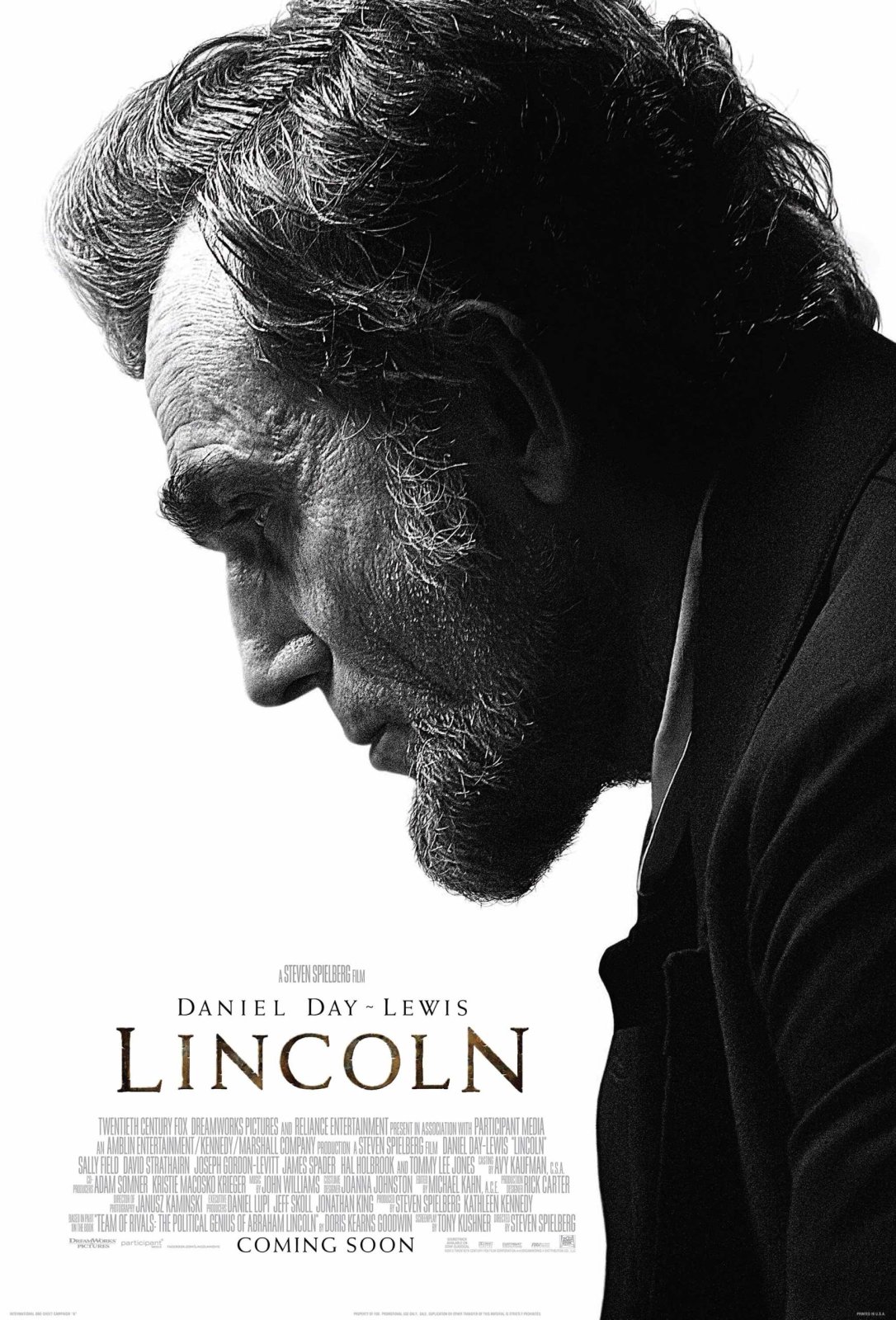

Lincoln Movie Poster
From $30.00
Reprint of the 2012 Spielberg Lincoln one-sheet on stretched canvas, framed paper, floating frame or rolled – Daniel Day-Lewis caught in tight black-and-white profile, the gold-set title and Coming Soon line a study in art house movie print restraint.
- All Australian orders for Art are Hand Made in Noosa, Australia (*International orders are printed overseas)
- We use 100% Cotton, textured canvas NOT the cheaper plastic looking, Poly-Cotton
- Free image manipulation such as removing red-eye, straightening horizons and lightening the image if needed
- Art is delivered ready to hang on the wall, straight to your door
- Carefully bubble wrapped and boxed to prevent damage in transit
- Free choice of 6 wrapping types
- Every canvas print is stretched by hand on a thick, 1.5” quality kiln-dried pine wood stretcher frame
- Protected with invisible spray UV laminate against fading in the harsh Australian climate, our art shouldn’t fade for up to 70 years!
The Canvas Prints Perth Difference
Related products
-

King Kong Classic Film Poster
Shop Now This product has multiple variants. The options may be chosen on the product page -

For your Eyes Only
Shop Now This product has multiple variants. The options may be chosen on the product page -

Alien Movie Poster
Shop Now This product has multiple variants. The options may be chosen on the product page -

Return of the Jedi
Shop Now This product has multiple variants. The options may be chosen on the product page


The Lincoln movie, directed by Steven Spielberg and released in 2012, focused on the final months of Abraham Lincoln’s presidency during the American Civil War. The film primarily examined the passing of the Thirteenth Amendment, which abolished slavery in the United States. Lincoln, played by Daniel Day-Lewis in an Oscar-winning performance, was portrayed as a leader navigating the complexities of a divided nation, balancing the war efforts with the pressing need for social reform. The film provided a glimpse into Lincoln’s determination and political acumen, showcasing his resilience in the face of political opposition, social unrest, and personal challenges.
The movie’s visual aesthetic was designed to reflect the somber tone of the period, with cinematography by Janusz Kamiński. The muted colours and historical accuracy in the set designs and costumes further immersed audiences in the atmosphere of the 1860s. Spielberg’s attention to detail was evident in every frame, with the focus on capturing the gravity of the moment. The film’s pacing and dialogue-driven narrative underscored the importance of the political battles taking place within the corridors of power, where Lincoln faced off against both allies and adversaries to push through his legislative agenda.
Daniel Day-Lewis’s portrayal of Lincoln was one of the key elements that defined the film. His performance, which included studying the historical figure’s mannerisms, speech patterns, and personal struggles, was widely praised by critics and audiences alike. Day-Lewis’s embodiment of Lincoln brought a depth of humanity to the role, showcasing the president’s emotional toll and the personal sacrifices he made. His meticulous preparation and commitment to the role made his portrayal of Lincoln one of the most memorable in cinematic history.
The film also explored the political intricacies and the behind-the-scenes negotiations that took place as Lincoln worked to secure the votes needed to pass the amendment. In doing so, it highlighted the power struggles within Congress and the difficult decisions Lincoln had to make in order to achieve his vision of a united nation. With a strong supporting cast, including Sally Field as Mary Todd Lincoln, Tommy Lee Jones as Thaddeus Stevens, and Joseph Gordon-Levitt as Robert Lincoln, Lincoln presented a compelling, nuanced view of one of the most significant periods in American history. The film not only portrayed Lincoln as a leader but also as a deeply human figure who understood the cost of the decisions he was making.
