
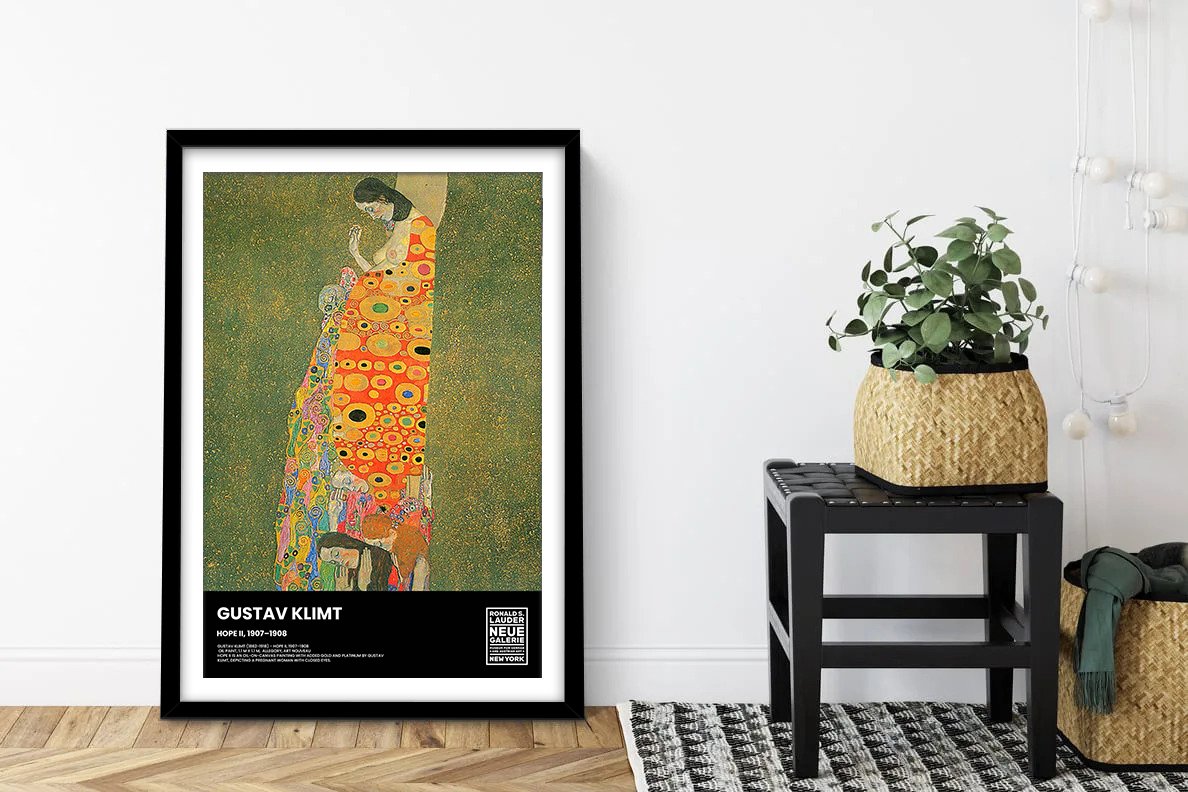


Klimt The Hope II Exhibition Poster
From $30.00
- All Australian orders for Art are Hand Made in Noosa, Australia (*International orders are printed overseas)
- We use 100% Cotton, textured canvas NOT the cheaper plastic looking, Poly-Cotton
- Free image manipulation such as removing red-eye, straightening horizons and lightening the image if needed
- Art is delivered ready to hang on the wall, straight to your door
- Carefully bubble wrapped and boxed to prevent damage in transit
- Free choice of 6 wrapping types
- Every canvas print is stretched by hand on a thick, 1.5” quality kiln-dried pine wood stretcher frame
- Protected with invisible spray UV laminate against fading in the harsh Australian climate, our art shouldn’t fade for up to 70 years!
The Canvas Prints Perth Difference
Related products
-

I and the Village – Chagall
Shop Now This product has multiple variants. The options may be chosen on the product page -

Buddha Statue at Sunset
Shop Now This product has multiple variants. The options may be chosen on the product page -

Wheatfield with Cypresses
Shop Now This product has multiple variants. The options may be chosen on the product page -

Wassily Kandinsky
Shop Now This product has multiple variants. The options may be chosen on the product page


Gustav Klimt’s The Hope II is a celebrated example of his masterful blending of symbolism and ornamentation, created in 1907-08 during the height of his “Golden Phase.” This period of Klimt’s career is characterised by his use of gold leaf and intricate decorative patterns, which he employed to imbue his works with an almost otherworldly radiance. The Hope II is a striking composition, dominated by a central female figure draped in a richly patterned golden robe. The subject, who appears to be pregnant, cradles her swollen belly, her bowed head suggesting a contemplative or reverent state. Surrounding her are an array of motifs, including stylised flowers and abstract forms, which intertwine with the shimmering gold background, creating a sense of ethereal beauty.
The painting is often interpreted as a meditation on the dual nature of life and death, which Klimt explored in various works. The figure’s serene expression and the nurturing gesture towards her unborn child evoke themes of hope and renewal. However, the inclusion of a skeletal face at the lower edge of the composition introduces an element of foreboding, reminding viewers of the fragility of life and the ever-present shadow of mortality. This interplay between creation and decay is central to the painting’s emotional resonance, inviting deeper reflection on the cyclical nature of existence.
Klimt’s use of symbolism in The Hope II reflects his engagement with contemporary movements and philosophies, particularly those that sought to explore the mysteries of human existence through art. The pregnant woman, a recurring subject in Klimt’s oeuvre, is often seen as a representation of fertility and the continuation of life. In The Hope II, the figure’s body is almost entirely enveloped by the intricate patterns of her robe, which seem to merge with the surrounding background. This blending of figure and environment creates a sense of unity, reinforcing Klimt’s fascination with the interconnectedness of all things. The shimmering gold and rich textures lend the work a spiritual quality, evoking the sacred iconography of Byzantine art, which Klimt greatly admired.
The Hope II is housed at The Museum of Modern Art (MoMA) in New York, where it continues to captivate audiences with its powerful combination of beauty and depth. It stands as a testament to Klimt’s innovative approach to art, combining traditional techniques with modernist experimentation. The painting’s rich symbolism and meticulous attention to detail ensure its enduring significance in the art world, offering viewers an opportunity to explore profound themes through the lens of Klimt’s unique vision. For those seeking to understand the complexities of life, death, and the human condition, The Hope II remains an evocative and timeless masterpiece.
