


Klimt Birch Forest 1903 Exhibition Poster
From $30.00
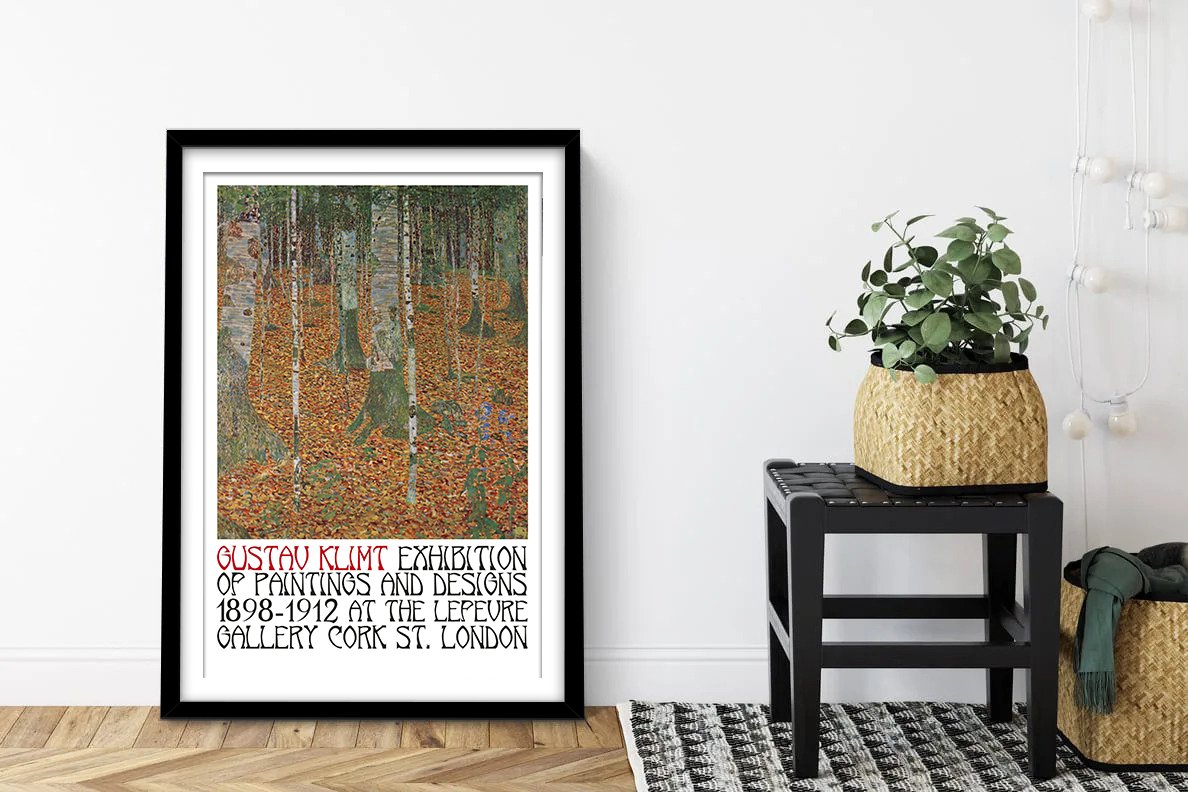
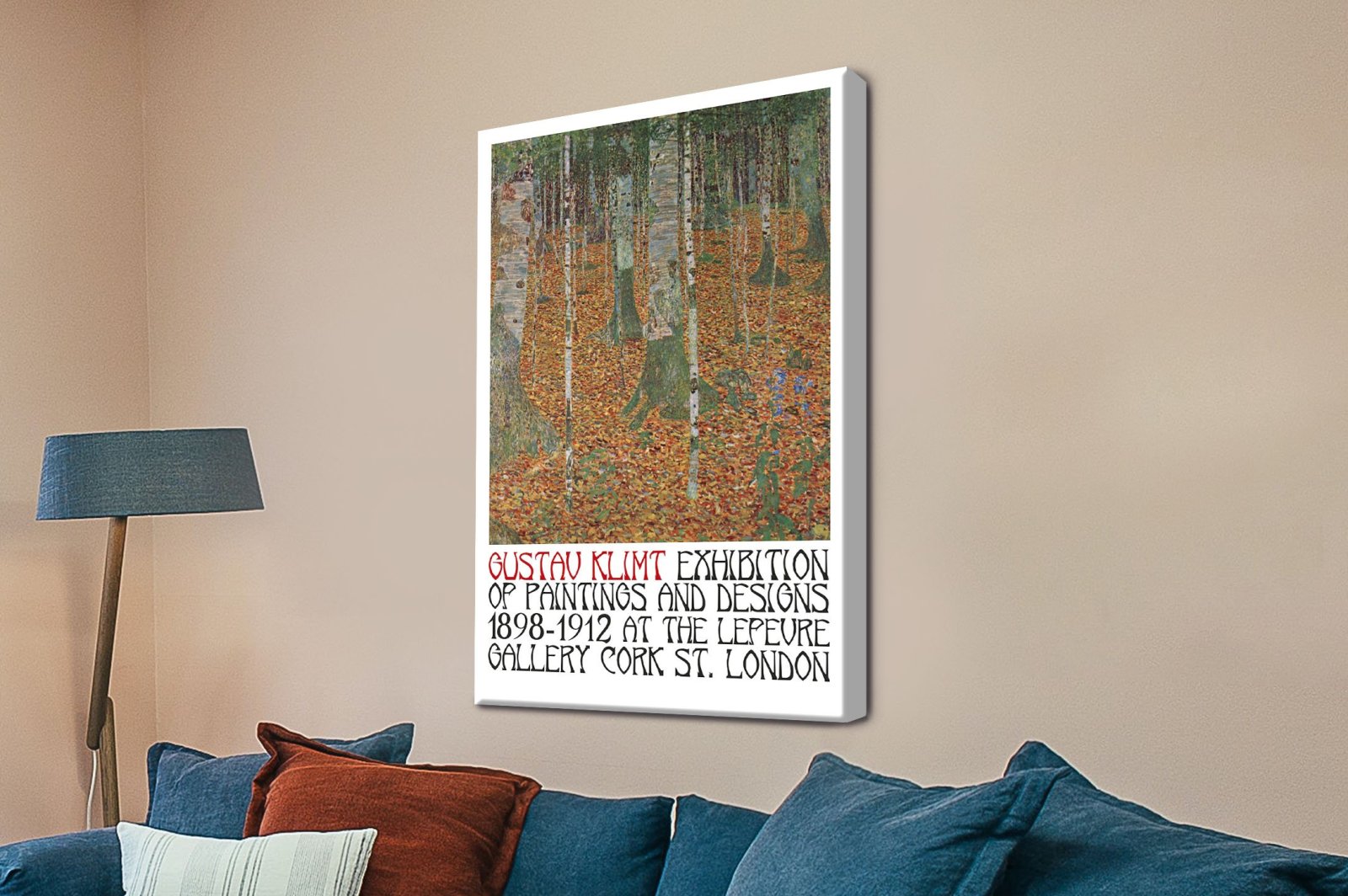
Klimt’s Birch Forest 1903 arrives as an abstract modern art reproduction styled on the original Lepevre Gallery exhibition poster, with slender silver birch trunks rising from a dense carpet of golden autumn leaves and the bold red Gustav Klimt title anchoring the foot. Printed in our Perth studio on premium canvas or archival paper, this modern Australian art print suits beige bedrooms, brick-walled lounges and styled hallway corners that need a warm woodland focal piece.
- All Australian orders for Art are Hand Made in Noosa, Australia (*International orders are printed overseas)
- We use 100% Cotton, textured canvas NOT the cheaper plastic looking, Poly-Cotton
- Free image manipulation such as removing red-eye, straightening horizons and lightening the image if needed
- Art is delivered ready to hang on the wall, straight to your door
- Carefully bubble wrapped and boxed to prevent damage in transit
- Free choice of 6 wrapping types
- Every canvas print is stretched by hand on a thick, 1.5” quality kiln-dried pine wood stretcher frame
- Protected with invisible spray UV laminate against fading in the harsh Australian climate, our art shouldn’t fade for up to 70 years!
The Canvas Prints Perth Difference
Related products
-

Carnival Evening
Shop Now This product has multiple variants. The options may be chosen on the product page -

Wassily Kandinsky
Shop Now This product has multiple variants. The options may be chosen on the product page -

The Persistence of Memory
Shop Now This product has multiple variants. The options may be chosen on the product page -

Buddha Statue at Sunset
Shop Now This product has multiple variants. The options may be chosen on the product page


Gustav Klimt’s “Birch Forest 1903” exhibition poster, created for the Lefevre Gallery on Cork Street in London, is an exceptional example of the artist’s distinct style at the turn of the 20th century. Klimt, best known for his golden, intricate and often sensual works, produced “Birch Forest” as part of his landscape series, which was a departure from his more iconic portraiture and allegorical compositions. The artwork itself is a captivating depiction of a serene forest scene, where trees stand tall and strong amidst an ethereal interplay of light and shadow. The use of delicate, almost ethereal lines within the birch trees contrasts with the more substantial trunks and creates a sense of tranquillity, providing a stark contrast to the dramatic, symbolist works for which Klimt would later become renowned.
The poster for the 1903 Lefevre Gallery exhibition itself is a wonderful fusion of Klimt’s evolving artistic voice with the promotional graphic styles of the early 20th century. It serves as a window into Klimt’s exploration of the natural world, which he had often used as a source of inspiration. The piece features a clean, yet evocative design, framed by bold, angular lettering that speaks to the modernist sensibilities of the period. The colour palette in the poster draws heavily on muted tones of golds and greens, reflecting the natural subject matter of the work it promotes, yet it retains a simplicity that contrasts with the more ornamental nature of Klimt’s later pieces. This understated elegance hints at the beginnings of Klimt’s departure from the conventional in pursuit of more expressive and avant-garde approaches.
In its time, the “Birch Forest 1903” exhibition was an important event for the art world, showcasing Klimt’s growing reputation beyond Vienna and bringing his work to a wider European audience. The Lefevre Gallery, located on Cork Street, was one of the most prestigious galleries in London at the time and had a history of hosting significant exhibitions. The gallery’s choice to feature Klimt’s work was indicative of his growing international appeal, especially as artists of the Vienna Secession movement were increasingly gaining recognition. Klimt’s appearance in London helped to solidify his status as an important figure in the European art scene and brought much attention to the expressive nature of his landscape work, which at that point was not as widely known as his more figurative and symbolic paintings.
Today, Klimt’s “Birch Forest 1903” poster stands not only as a valuable historical artefact but also as an intriguing entry point for those looking to understand the artist’s evolution. The exhibition poster highlights Klimt’s early exploration of the natural world and offers insight into his design sensibilities during a pivotal period of his career. The Lefevre Gallery’s exhibition would mark an important moment in the trajectory of Klimt’s rise as an international artist, and the poster itself, now a sought-after collectable, serves as a reminder of his far-reaching influence. As a piece of art history, it is an essential resource for collectors, historians, and admirers of Klimt’s rich legacy, providing context and understanding to one of the key stages in his artistic development.
